
SOLUTION · AI SUPPLIER DETECTION
Panorays Third-Party AI Risk Assessment Solution
Effortlessly identify vendors utilizing AI, evaluate AI-specific risks, and implement tailored controls, without slowing down internal processes.
THE CHALLENGE
Why Third-Party AI Risk Requires a Different Assessment Approach
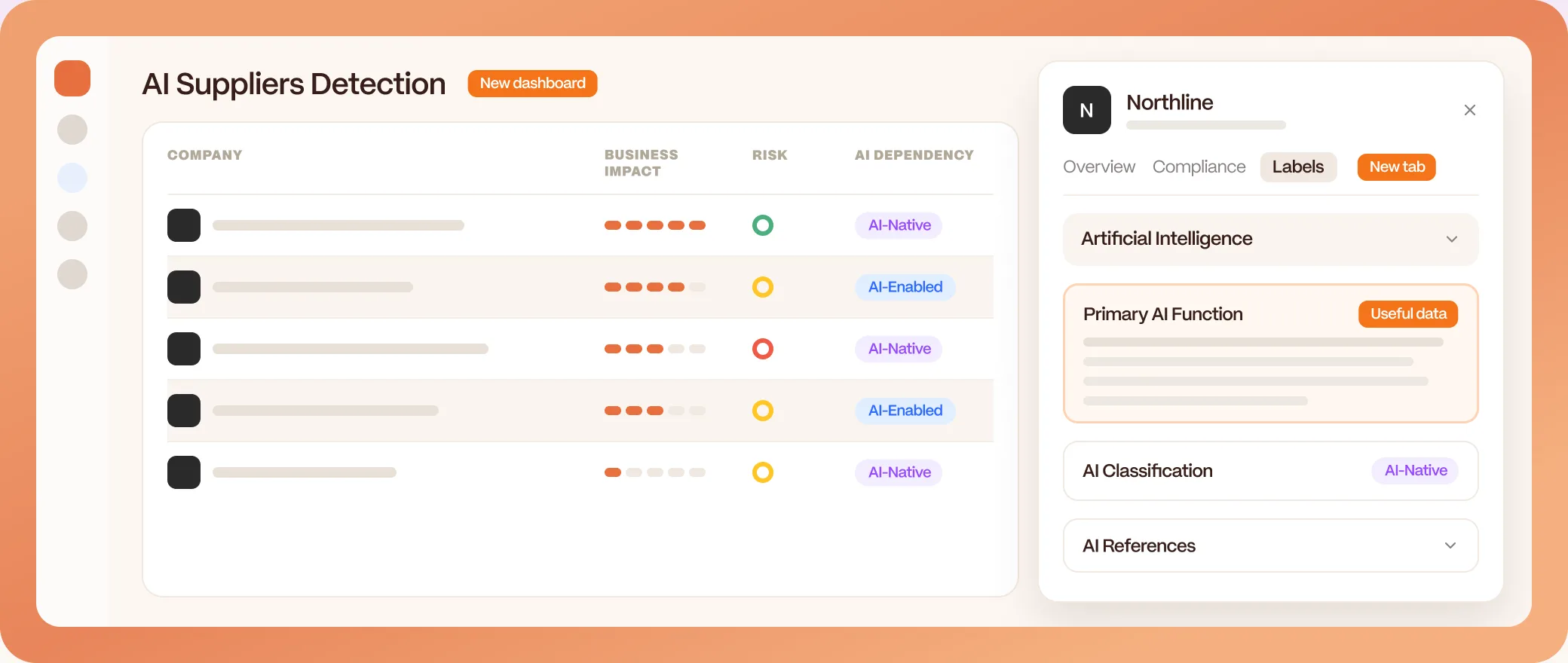
Most organizations lack visibility into third party AI risk. AI introduces new exposures traditional assessments were not designed to evaluate, particularly around data use, model behavior, and regulatory impact. Many vendors embed AI into their services without clear disclosure, while their capabilities evolve continuously.
Overview
What Is Vendor AI Risk Assessment?
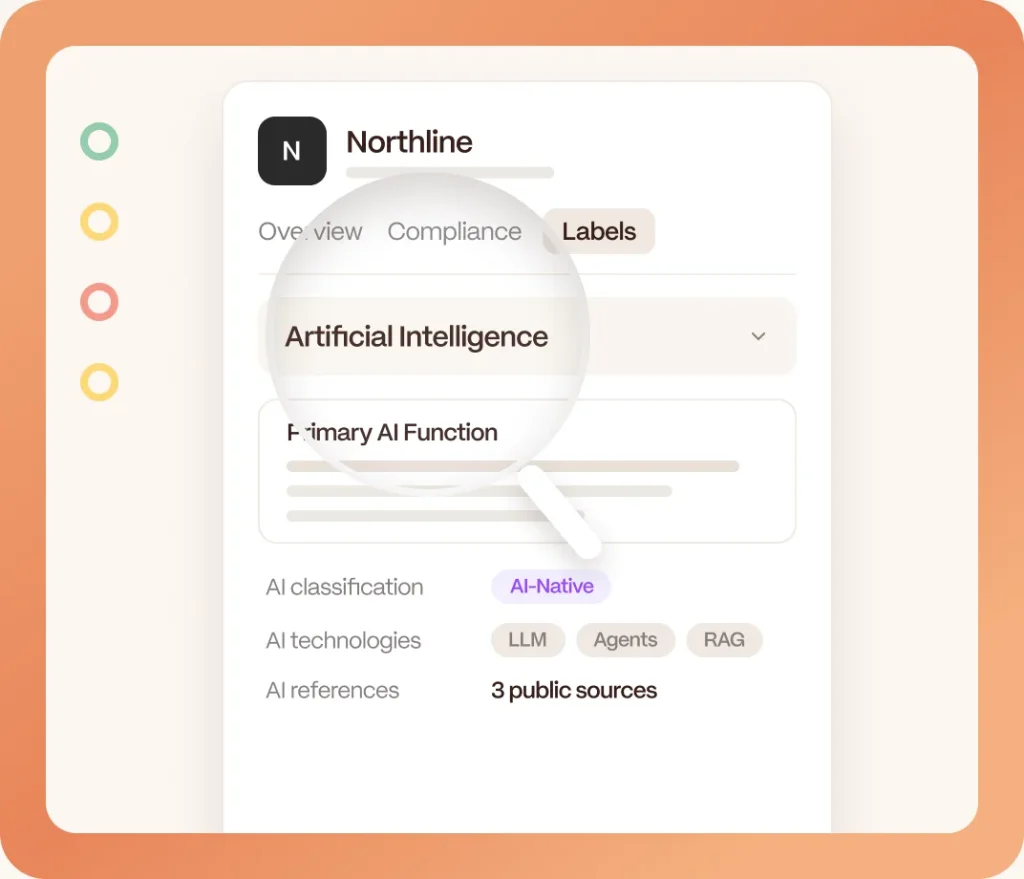
With Panorays Supplier AI Risk Detection, you gain clear visibility into which third parties are using AI and how. By leveraging multiple internal and external data sources, Panorays identifies and labels suppliers using AI, while providing a dedicated, consolidated report that brings them all into a single view, helping you understand exposure and plan your risk strategy proactively. Based on your evaluation types, you can seamlessly send AI-focused follow-up questionnaires to assess AI best practices. Combined with Panorays Cyber assessments and inherent Risk insights, you can manage AI cyber risk confidently across your entire third-party ecosystem.
Detection
Automatically Identify Vendors That Use AI
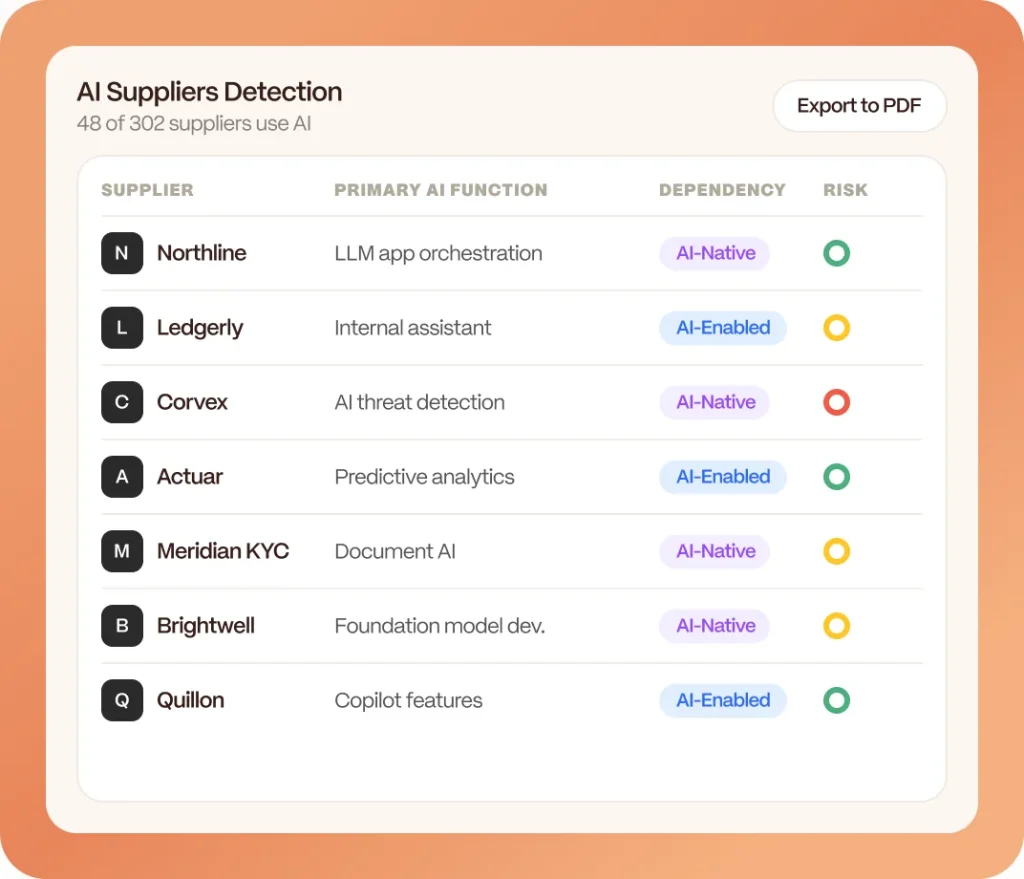
Panorays helps you secure your digital supply chain while keeping pace with AI adoption. The new Supplier AI Risk Detection module identifies which third parties are using AI by leveraging external intelligence, certifications, and discovery methods. Third parties who are using AI are labeled at the individual level, while a dedicated report provides a granular, consolidated view with detailed insights. By eliminating manual research and inconsistent labeling, you can maintain visibility into AI risk, even when vendors don’t explicitly disclose usage, and stay proactively ahead of third-party AI exposure before it becomes a blind spot.
Questionnaires
Get Clear AI Risk Insights With Targeted Questionnaires
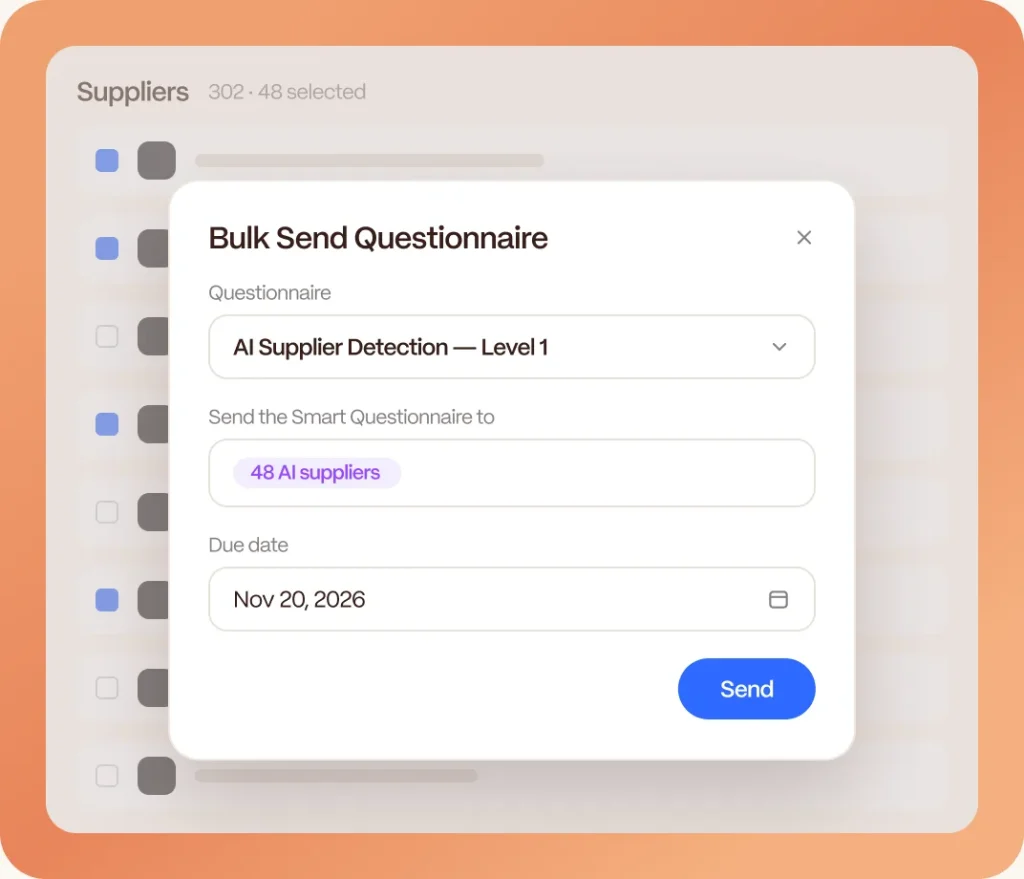
Most third-party questionnaires overlook AI risk entirely. They rely on generic questions that fail to address AI-specific usage, controls, and best practices. After identifying which third parties actually use AI, Panorays recommends sending targeted, AI-focused questionnaires, rather than one-size-fits-all forms.
Panorays offers three specialized AI questionnaire templates, designed to assess AI risk at increasing levels of depth. These cover basic AI usage that can be answered using public information with the help of our AI Answer Advisor, as well as more detailed and advanced AI topics that require direct input from third parties and are aligned with ISO 42001, NIST AI RMF and the EU AI Act.
TIERING
Prioritize and Tier Vendors Based on Actual AI Risk
AI becomes its own pillar in shaping a vendor’s profile, beyond traditional inherent risk factors. This enables accurate tiering, continuous monitoring for higher risk vendors, and compensating controls wherever AI exposure increases potential impact.
AI Risk Assessment Across the Vendor Lifecycle
From first detection to ongoing monitoring, AI risk stays part of every stage.
Identification
1
Automatically identify AI-enabled vendors
Build a complete inventory of vendors that use AI to support monitoring, tiering, and risk decisions.
Assessment
2
Assess vendor AI risk during onboarding
Verify AI usage early and apply the right assessment and controls from day one.
Evaluation
3
Evaluate AI practices at scale
Send AI questionnaires to multiple vendors to assess maturity, governance, and risk.
Support
4
Support audits, compliance, and reporting
Generate clear reports of vendors who are using AI for internal stakeholders and regulators.
Monitoring
5
Maintain ongoing oversight as AI usage evolves
Continuously evaluate vendor AI practices as technology, scope, and risk change.
Start Managing AI Risk
Across Your Vendors
Identify AI usage, assess AI-specific risk, and prioritize security efforts with confidence.